

I was recently back on the campus of my old university, the University of East Anglia. It was there, studying at the Sainsbury Centre, that I really developed a love for art.
As a museum designed to challenge traditional ways of displaying and experiencing visual culture, it was an inspiring place to spend my student days. More importantly perhaps, it also instilled in me the idea that creativity can be a powerful driver for change.
Being back brought with it plenty of nostalgia, but it also reminded me of the work I was doing there as a student. In particular, my dissertation, which explored the role the creative industries plays in protest and how artists communicate the urgency of the climate crisis.
Now, midway through B Corp Month, it felt like the perfect moment to revisit some of the artworks and creativity that inspired me back then, alongside new artists and organisations I’ve discovered are doing amazing work since. From performance to large-scale installations and festivals, creativity continues to play a powerful role in helping people understand, and respond to, the climate crisis.
Ice Watch, Olafur Eliasson
Instantly recognisable, Eliasson’s Ice Watch uses 24 blocks of ice to communicate the effects of the melting ice caps. Weighing between 1.5 and 5 tonnes, it’s difficult to install, but even more difficult to ignore. In my opinion, public art at its best.
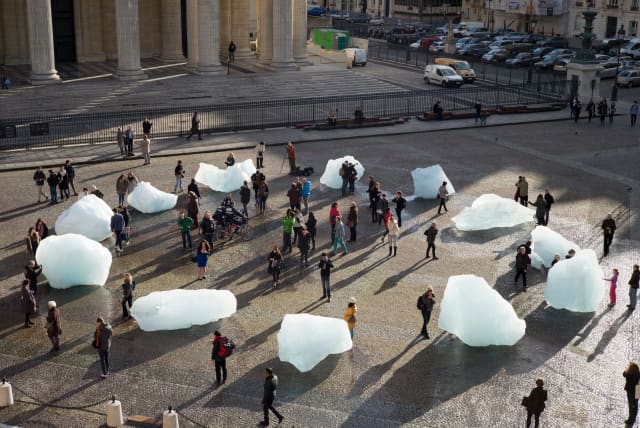
Ice Watch, 2014, Place du Panthéon, Paris, 2015. Photo: Martin Argyroglo
Julie’s Bicycle
Not an artwork, but instead a very important organisation. For over 20 years, Julie’s Bicycle has led climate action in the culture and creative sector through training, strategic leadership programmes, cross-sector campaigns and pioneering projects.
By supporting cultural organisations to measure and reduce their environmental impact, they’ve helped embed sustainability into the heart of the creative industries.
Find out more: https://juliesbicycle.org/
Red Rebel Brigade, Extinction Rebellion
A daring performance piece, the Red Rebel Brigade has become synonymous with climate protests across the world. Clad in bright red robes, the performers move slowly and silently through public spaces. Their haunting presence symbolises the devastating impact of environmental destruction, using movement and visual symbolism rather than words to communicate urgency.
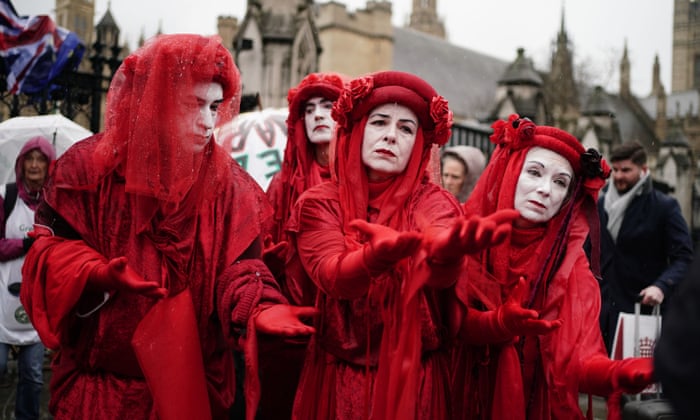
Red Rebel Brigade, Extinction Rebellion, 2023, Photograph: Jordan Pettitt/PA
Shambala Festival
While researching festivals recently, I was struck by the environmental commitments of Shambala Festival.
The festival has been completely meat- and fish-free since 2016 and is powered by 100% renewable energy. Alongside this, it has introduced numerous initiatives to reduce waste and carbon emissions. For a large-scale music festival, these commitments are pretty remarkable and show how live events can rethink their environmental impact.
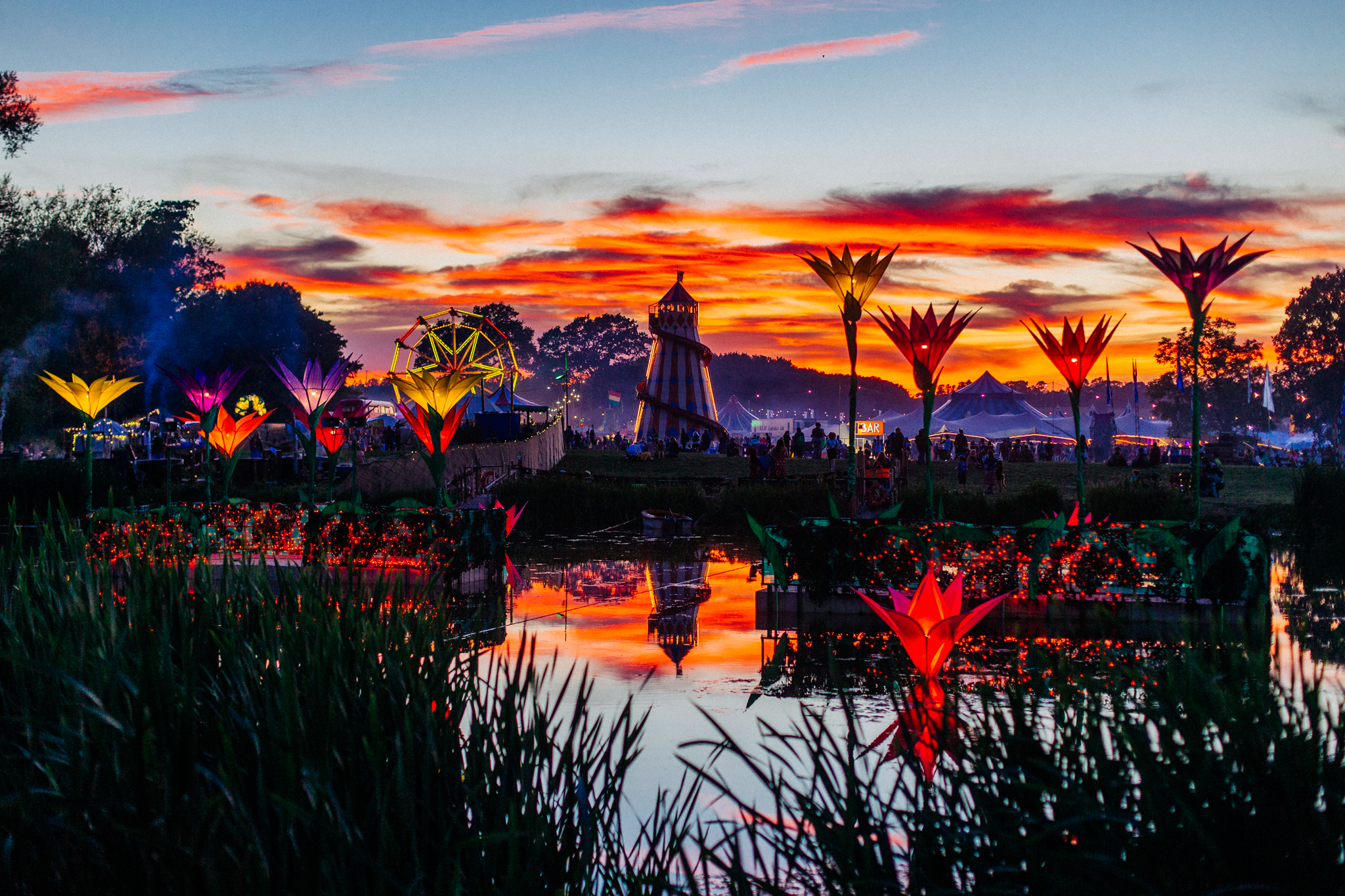
Shambala Festival
Fragile Earth: Sounds of a Living Planet, Barbican
A recent concert season at the Barbican Centre explored how artists are inspired by the natural world, and how they’re responding to its increasingly fragile state.
While the season has now come to an end, an entire programme dedicated to this theme is a hopeful reminder that the creative industries continue to use their platforms to spark conversation and raise awareness about the climate crisis.
Wheatfield – A Confrontation, Agnes Denes
How could I not include this artwork? Agnes Denes is a pioneer of environmental art, and her work Wheatfield – A Confrontation is a powerful symbol of ecological imbalance.
In 1982, Denes planted a two-acre wheat field on a landfill in lower Manhattan. Over several months, the field was carefully maintained and eventually harvested, producing more than 1,000 pounds of wheat.
Set against the skyline of global finance, the golden field became a striking statement about land use, food systems and the priorities of modern society.
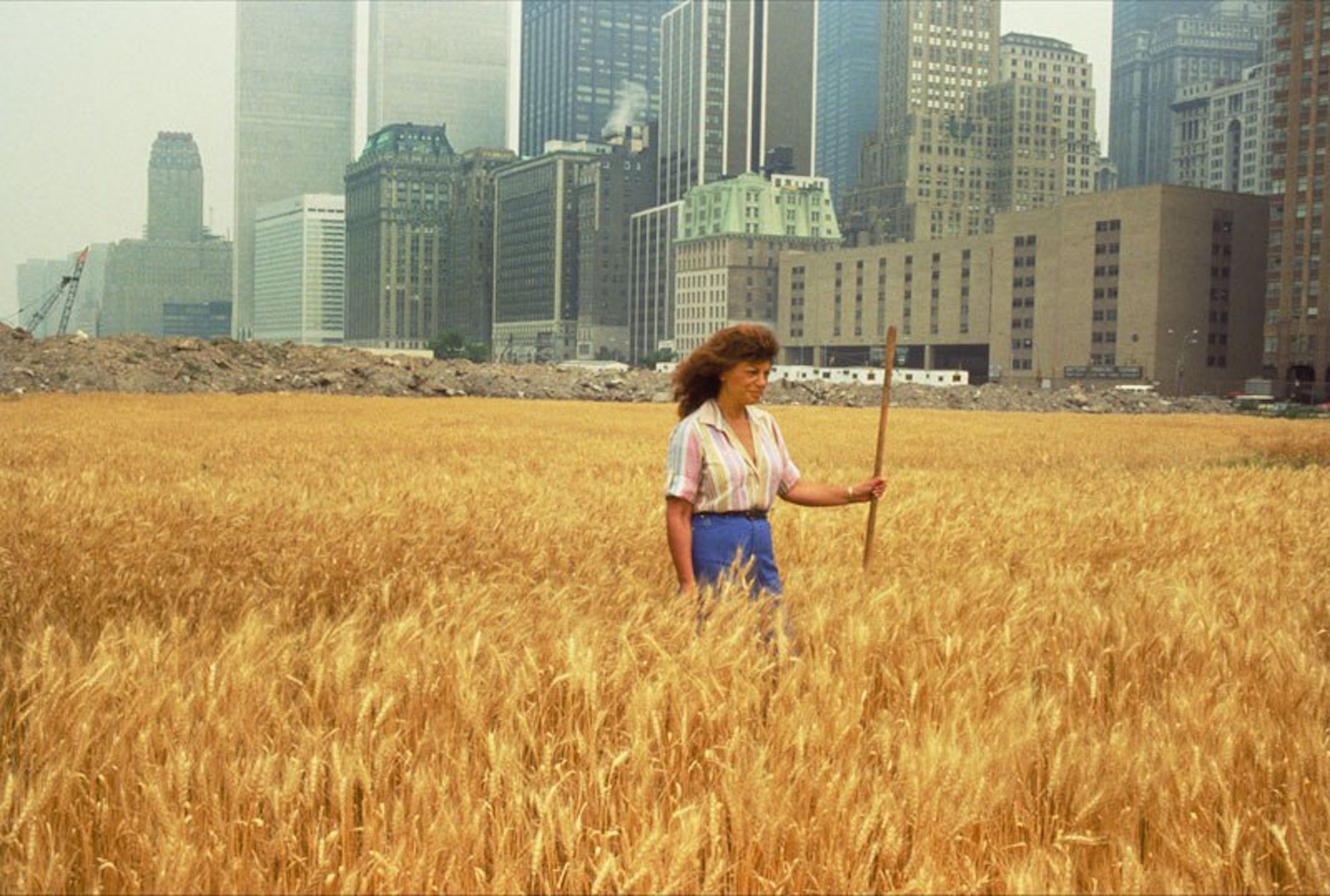
Agnes Denes, Wheatfield – A Confrontation: Battery Park Landfill, Downtown Manhattan – With New York Financial Center, 1982. © the artist.
Of course, this is just a small snapshot of the artists and organisations using creativity to highlight the need for a more sustainable future – there are many more doing incredible work.
At HdK, our own commitment to sustainability is reflected in our B Corp certification, which recognises the responsibility digital marketers have to consider their social and environmental impact.
To learn more about what it means for us to be a B Corp company, you can read our blog from last year here.