When I started HDK in 2004, Facebook had just launched. Not that anybody was talking about Facebook. Most of the conversations I was having were about whether online ticketing would take off, whether email marketing actually worked and whether anybody would ever watch video online. The answer to all three eventually turned out to be yes.
At the time, persuading some arts organisations to invest in digital marketing was hard work. Google Ads had already been around for a couple of years, but spending money on digital still felt experimental to a lot of people. Creating video content was an even harder sell. Broadband was only just becoming common, and if you wanted to watch a video online there was a fair chance you’d spend longer waiting for it to load than actually watching it.
Before HDK, I’d been heading up digital marketing at a London arts and entertainment agency. It was a new role for the business, which should probably have been a clue about where digital sat in most of their clients’ thinking.
Then the agency unexpectedly closed.
Losing your job is rarely part of the plan, but I’d always liked the idea of working for myself. Faced with a choice between joining another established agency and taking a chance, I took a chance. 22 years later, we’re still here.
When social media was actually social
Within a couple of years everything started moving very quickly. YouTube arrived. Then Twitter. Social media became impossible to ignore. MySpace was still hanging on, and Friends Reunited was helping people reconnect with classmates they’d spent years trying to avoid.
Nobody knew which platforms would survive. We certainly didn’t.
One of my biggest clients then, Heather Knight at Dance Consortium, was kind enough to indulge my enthusiasm and let us experiment. And it really was experimenting.
Arts marketers were creating fictional characters with Twitter accounts. Some organisations were trying to tell whole stories through tweets. We spent a lot of time wondering whether this was the future or a distraction. As it turns out, it was a bit of both.
The arrival of YouTube was perhaps even more significant. I’d been making video content since my days at Sadler’s Wells, and always felt that dance, theatre and live performance deserved to be seen rather than described.
The problem was never creating the content. The problem was getting anybody to watch it. Suddenly we had a platform that could host videos easily. Audiences had broadband. All those years spent learning to edit trailers became genuinely useful. I don’t think any of us appreciated quite how dominant video would become.
Bruno was right
Of all the changes I’ve seen, the arrival of the iPhone was probably the one that felt most significant at the time.
Years earlier, when I was at Sadler’s Wells, our IT manager Bruno used to talk enthusiastically about a future where we’d all carry powerful internet-connected devices around in our pockets. I thought it sounded brilliant. I also thought it sounded a long way off. Then my friend Colin showed me his new iPhone. I remember holding it and knowing at once that Bruno had been right all along. I also remember wanting one immediately.
It took a few years before clients started routinely asking whether their websites worked on mobile, but once they did there was no going back. Responsive design became standard. We built mobile apps. Whole website projects started being designed around mobile first. Today that all seems completely obvious. At the time it felt revolutionary.
The platforms that changed everything and disappeared
One thing I’ve learned over 22 years is that technology companies are very good at announcing revolutions. Some of them actually happen. Some of them don’t.
Remember Vine? For a brief period it looked like short video was going to change the world. Then Vine disappeared almost as quickly as one of its six-second videos.
And yet, in a strange way, it won. TikTok, Instagram Reels and YouTube Shorts all owe something to the behaviour Vine helped popularise. The platform died but the idea survived. The same thing happened with countless apps, platforms and trends that have come and gone over the years.
The years we all became experts in cookie banners
While social media was grabbing headlines, another set of changes was reshaping the web. Cookies. Privacy policies. Consent management. GDPR.
Nobody has ever called us excitedly asking for a new cookie banner. I suspect a lot of people would happily go the rest of their lives without seeing another one. Including me.
But from a website perspective, these changes fundamentally altered how organisations collect data, understand audiences and market to people. Some of the biggest changes in digital aren’t glamorous. They’re just unavoidable.
The pandemic years
Then came 2020. For arts and cultural organisations the challenge was immediate. If audiences couldn’t come to venues, how would organisations reach them?
Almost overnight our clients were trying to stream performances, create digital experiences and find entirely new ways of engaging people.
We helped organisations put content behind paywalls and stream performances. We built online experiences from theatres, rehearsal rooms, gardens and occasionally from places that really weren’t designed for broadcasting anything. While friends in other sectors were being furloughed, we found ourselves busier than ever.
It was scary and stressful at times. But it’s also one of the periods I’m proudest of. The sector adapted with incredible speed and creativity. Many of the digital services audiences now take for granted got their start in those years.
The metaverse and other things that didn't quite happen
Around 2021 and 2022, it became hard to avoid somebody mentioning the metaverse. Jannick and I found ourselves in front of 300 arts marketers explaining what it was. We looked into it and got ready for it. Then not very much happened. At least, not yet.
I’ve learned to be careful about dismissing technologies completely. Every now and then something you were sure was nonsense turns out to matter.
Growing up as a business
As HDK has grown, the conversations have changed.
Accessibility has always been central to our work. Sustainability has become increasingly important. We spend far more time thinking about inclusion, ethics and long-term impact than we did 20 years ago.
Becoming a B Corp was an important milestone. It gave structure to values that had gradually become part of how we worked, and formalised things we already cared about.
The same is true of our involvement with Arts Council England’s All In accessibility programme. Those projects reminded us that technology isn’t really the goal. The goal is helping more people take part. The technology is simply how we get there.
And now AI
Which brings us neatly to AI. The latest technology that will apparently change everything forever. Maybe it will. Some things are certainly changing very quickly.
But after 22 years of Facebook, YouTube, smartphones, apps, GDPR, streaming, the metaverse, accessibility standards, sustainability initiatives and more social media platforms than I can remember, I’ve become a little cautious about predictions.
The thing that has stayed remarkably consistent is that arts and cultural organisations want to connect with audiences. That’s what our clients wanted in 2004 and it’s what they want today. The tools keep changing. The objective doesn’t.
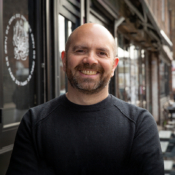 Hans de KretserDirector & Founder